How to Choose a Design Institute Near Aundh & Pashan, Pune
If you’re searching for a design institute near Aundh or Pashan, you’ve probably noticed that there are plenty of options around. The real challenge is figuring out which institutes offer quality education and practical learning, and which ones may not be the right fit for your goals.
Fashion, interior, graphic, and jewellery design are five different fields. Each design field has its own course structure, software tools to learn, and career opportunities, so the right choice depends on your interests and career goals. Still, most local searches group them all under the label “design institute near me, ” making it hard to find a design institute near Aundh & Pashan.
This guide takes an approach. Rather than offering a top ten list, it shows you exactly what to look for in each discipline. That way, you can compare design institutes near Aundh & Pashan and the broader Baner area based on facts ahead of marketing promises.
Why Location Near Aundh and Pashan Actually Matters
Aundh and Pashan sit close to Baner, Balewadi, and Pashan Road – a stretch of west Pune with a fairly dense cluster of design and vocational training institutes, alongside university and research campuses. For a design student, proximity matters for a practical reason: design education is studio-heavy. Fashion and Interior Design courses in particular involve regular use of studios, sampling rooms, and material libraries, and commuting long distances for multi-hour studio sessions gets old fast over a two- or three-year course.
That said, location alone shouldn’t decide your choice. It should narrow your shortlist to institutes you can realistically attend several days a week, after which the comparison should shift to curriculum, faculty, and recognition – covered discipline by discipline below.
Interior Design Institute Options in Aundh & Pashan: What to Verify First
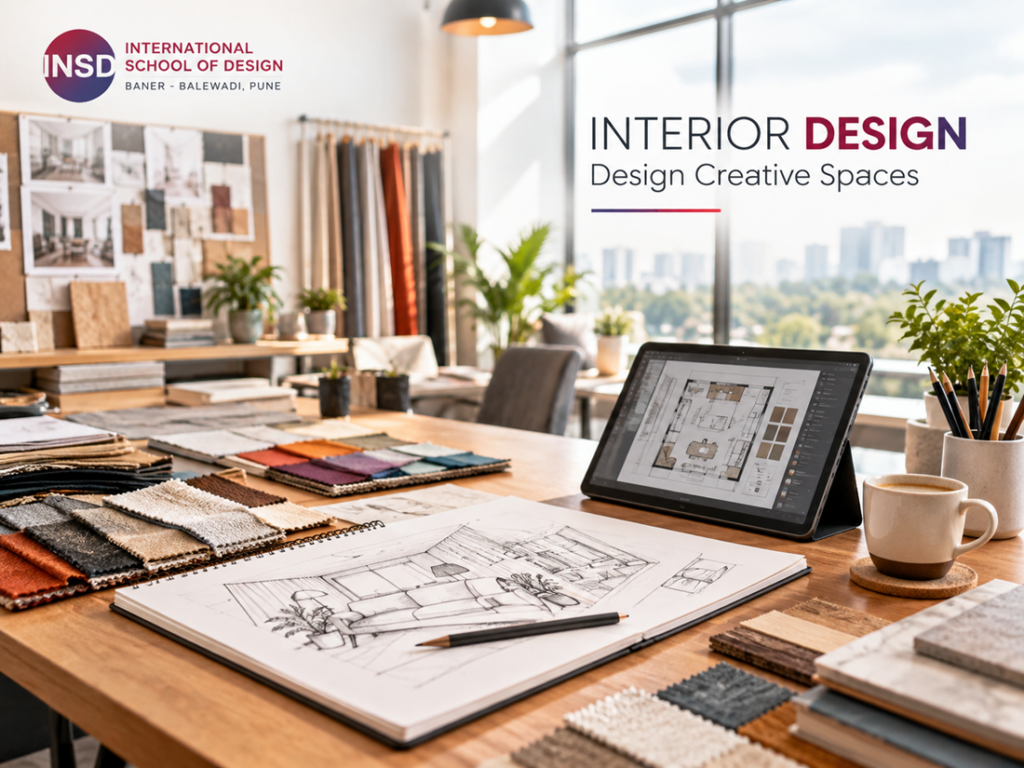
Interior Design is one of the more structured design disciplines in India, mainly because it overlaps with construction and safety codes, not just aesthetics. Before shortlisting an interior design institute in Aundh or Pashan, check three things:
- Course level and recognition. Interior Design is taught as a certificate course (a few months), diploma, advanced diploma, or full degree (B.Des/equivalent). Degrees carry more long-term value for a design career, especially if the awarding university is UGC-recognised – this is worth verifying directly rather than taking a brochure’s word for it.
- Studio and software exposure. Ask specifically whether the course covers manual drafting fundamentals alongside CAD, 3D visualisation, and material/finish selection – not just software training.
- Live or industry-linked projects. Interior Design is a practice-based field; a course that includes real client-style briefs (even small ones) prepares you better than one that’s purely theoretical.INSD’s campus sits on Baner Main Road, a short distance from both Aundh and Pashan, and its Interior Design courses are offered across Certificate, Diploma, Advanced Diploma, and Degree formats – so the comparison points above apply directly when evaluating it against other options in the area.
Fashion Design Institute in Aundh: Degree, Diploma or Certificate?
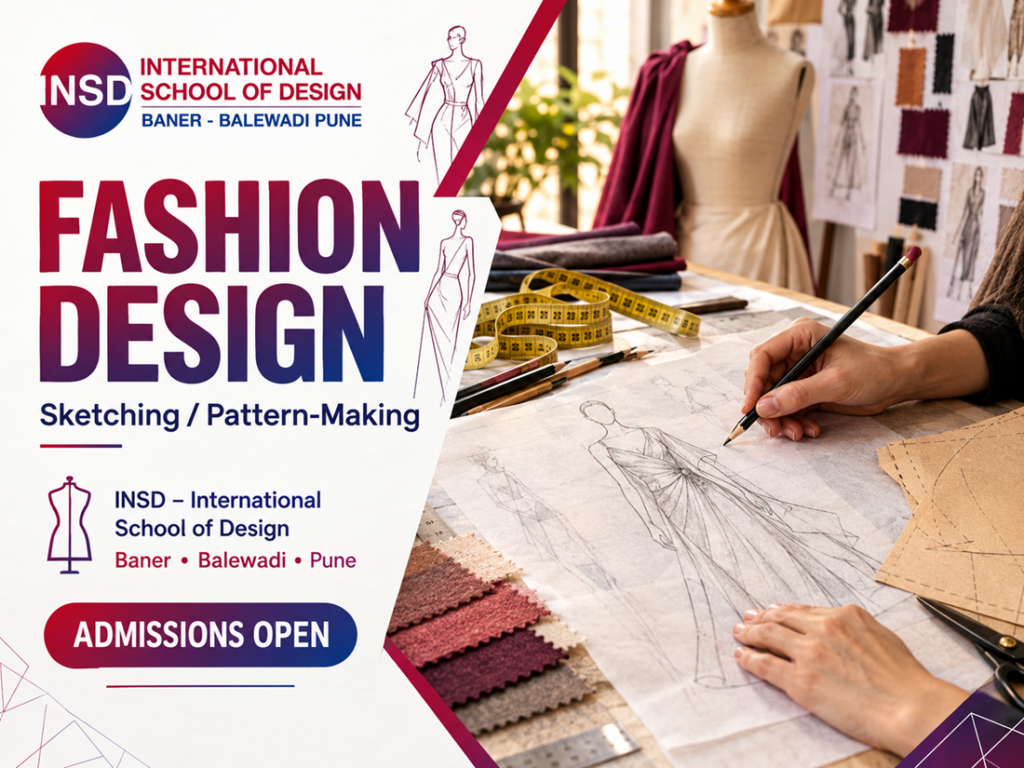
Searches for a fashion design institute in Aundh usually come from two very different groups: school leavers deciding on a full-time career, and working adults wanting a focused skill (like pattern-making or styling) without committing to a multi-year degree. The right course format depends entirely on which group you’re in.
For a career-track path, a degree program typically covers design fundamentals, garment construction, textiles, pattern-making, and a final portfolio/collection – this is the format most aligned with entering the fashion industry directly or pursuing further study. A certificate course is better suited to someone testing interest in the field or upskilling in one specific area.
Whichever format you’re considering, ask to see actual student portfolios or final-year collections from past batches. In a visually driven field like fashion design, this tells you more about teaching quality than almost anything else on a brochure. INSD Baner’s Fashion Design courses are structured across Certificate, Diploma, Advanced Diploma and Degree levels, which is worth keeping in mind if you’re trying to match a course format to where you are in your career.
Graphic Design Institute in Aundh: What the Course Should Actually Teach
Graphic Design is the discipline most likely to have “crash courses” that focus purely on software shortcuts. When evaluating a graphic design institute in Aundh, the more useful filter is whether the syllabus goes beyond tool training into design thinking – typography, layout, colour theory, branding, and UI/UX fundamentals – since software interfaces change every few years but design principles don’t.
It’s also worth asking how the course handles the fast-moving overlap between traditional graphic design and UI/UX or digital design roles, since most graphic design hiring today expects at least basic familiarity with digital and web-oriented design work. INSD offers Graphic Design courses at different levels, from short-term certificate programs to full degree courses. This makes it a useful benchmark when comparing Graphic Design institutes around Aundh.
Jewellery Design Institute in Aundh vs. Jewellery Designing Classes in Pune
This is where two search terms – “jewellery design institute in Aundh” and “jewellery designing classes in Pune” – often mean genuinely different things, and it’s worth being clear about which one you actually want before you call around.
- Jewellery design institute/degree or diploma course: Aimed at building a professional career in jewellery design – covers design fundamentals, CAD for jewellery, materials and gemmology basics, and manufacturing processes. Typically several months to a few years.
- Jewellery designing classes: Usually shorter, sometimes hobby-oriented (e.g., basic jewellery-making or sketching), aimed at enthusiasts rather than career entrants.
If your goal is a career in the jewellery or gems industry, prioritise institutes offering a structured diploma or degree with CAD and materials training over a short class, even if the class is more convenient in the short term. INSD Baner offers Jewellery Design courses at different levels, including Certificate, Diploma, Advanced Diploma, and Degree programs. This gives students the flexibility to choose a course based on their career goals, interests, and the level of expertise they want to develop.
A Quick Checklist Before You Shortlist Any Institute
Regardless of which discipline you’re comparing, run every institute through the same short checklist:
- Is the degree/diploma UGC-recognised or AICTE-approved where applicable? Don’t take a brochure’s claim at face value – cross-check on the regulator’s own site.
- Does the course level (Certificate → Degree) match your actual goal – quick skill vs. full career?
- Can you see real student work or past final projects, not just stock images?
- Does the syllabus name specific software, techniques, or industry processes – or just vague terms like “modern design tools”?
- Is there any live-project, internship, or placement-assistance component, and can they explain how it actually works (not just that it exists)?
- Is the campus commute realistic for the number of days/hours the course actually requires each week?
FAQs
Is it better to study at an institute close to Aundh/Pashan, or does the actual location not matter much? Location mainly affects convenience and consistency of attendance, which matters a lot for studio-heavy courses like Fashion and Interior Design. Beyond that, curriculum, faculty, and recognition matter more than the exact locality.
What’s the real difference between a diploma and a degree in design fields like Interior or Fashion Design? A diploma is typically shorter and more skill-focused, while a degree (B.Des or equivalent) is longer, broader, and – if from a UGC-recognised university – generally carries more weight for long-term career growth and further study.
Are “jewellery designing classes” the same as a jewellery design course? Not usually. Classes are often shorter and more hobby-oriented, while a diploma or degree course goes deeper into CAD, materials, and manufacturing processes aimed at a professional career.
Why are there fewer dedicated textile design institutes in Pune compared to fashion design institutes? Textile Design is more commonly offered as a specialisation within a fashion design program than as a fully independent course, so standalone textile-focused options are naturally fewer.
How do I actually verify if a design course is UGC-recognised before enrolling? Check the awarding university’s name directly on the UGC’s official list of recognised universities, rather than relying only on the institute’s own claims – this takes a few minutes and avoids relying solely on brochure language.
Does a graphic design course really need to cover UI/UX, or is that a separate field? They’re related but not identical. Many graphic design roles today expect at least basic digital/UI awareness, so a course that touches on it gives you more flexibility, even if UI/UX isn’t your main focus.
Conclusion
Choosing a design institute near Aundh or Pashan comes down to matching three things: the discipline you actually want (Fashion, Interior, Graphic, Jewellery, or Textile), the course depth that fits your goal (a quick certificate vs. a full degree), and verifiable basics like recognition and real student work. Once you’ve narrowed it down using the checklist above, it’s worth speaking directly with two or three shortlisted institutes rather than deciding from websites alone.
If you had like to see how INSD Baner Fashion, Interior, Graphic, Jewellery, and Textile Design courses are structured, you can explore all courses here or get in touch for a course-specific query.