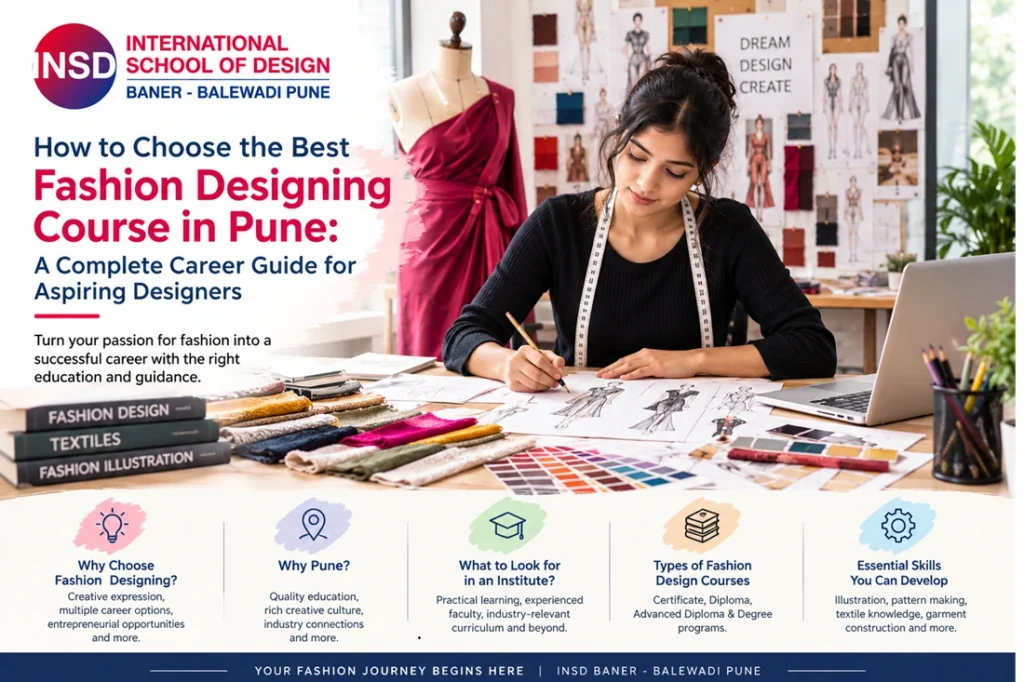
How to Choose the Best Fashion Designing Course in Pune: A Complete Career Guide for Aspiring Designers
Fashion is not just about what we wear; it’s about expressing who we are, showcasing our creativity, and celebrating culture through unique styles and designs.. From designing everyday outfits to creating luxury collections, the fashion industry offers exciting opportunities for people who enjoy experimenting with colours, fabrics, patterns, and styles.
If you love fashion and dream of turning your creative ideas into a career, a professional fashion design course can be a great place to start. Pune is a popular choice for students who want to explore the world of design, gain hands-on experience, and build skills for a future in the fashion industry.
But with so many institutes and courses to choose from, finding the right one can sometimes be confusing. Don’t worry! In this guide, we’ll walk you through the important things to consider before enrolling, the skills you’ll learn, and the exciting career opportunities that await you after completing your course.
1. Why Choose Fashion Designing as a Career?
Fashion designing combines creativity with technical knowledge. A fashion designer does much more than sketch attractive outfits. Designers research trends, understand fabrics, develop concepts, create patterns, and transform their ideas into wearable garments.
The fashion industry also includes several professional areas, such as apparel design, fashion styling, textile development, fashion merchandising, costume design, and fashion entrepreneurship.
Here are some reasons why students choose fashion design:
- Creative expression: Convert your imagination and ideas into original designs.
- Multiple career opportunities: Explore careers in apparel, styling, retail, textiles, and fashion businesses.
- Entrepreneurial possibilities: Start your own clothing label, boutique, or fashion consultancy.
- Continuous learning: Stay connected with changing trends, technologies, and consumer preferences.
- Industry exposure: Work on projects that help you understand how the fashion business operates.
The right fashion design course can help you build the skills and knowledge you need to turn your passion into exciting career opportunities.
2. Why Is Pune a Good City to Study Fashion Designing?
Pune is known for its educational institutions, growing professional environment, and diverse student community. It attracts students from different parts of Maharashtra and other regions who want to pursue higher education and creative careers.
Pune gives students a great opportunity to explore the fields of fashion, lifestyle, retail, and design. Being close to Mumbai and other major commercial cities also makes it easier to understand the fashion industry, explore new trends, and learn about different career opportunities.
When searching for fashion design classes in Pune, students should consider more than the distance from their homes. The quality of practical training, course structure, faculty guidance, learning environment, and student projects are equally important.
Baner and Balewadi are also good locations for students who want to pursue fashion and design courses in the western part of Pune, with convenient access to educational opportunities.
3. What Should You Look for in a Fashion Design Institute?
Choosing the right institute is a big step in your fashion journey. The institute you select can make a real difference in how you learn, improve your creativity, build practical skills, and prepare for your future career.
Before enrolling, consider the following factors.
A. Practical Learning Opportunities
Fashion design is a practical subject. Students need opportunities to experiment with fabrics, create patterns, understand garment construction, and develop complete design concepts.
Look for an institute that includes practical assignments, workshops, garment projects, and portfolio development as part of its learning process.
B. Experienced Faculty and Mentorship
Learning from experienced teachers can make your fashion journey easier and more rewarding. They can help you understand design basics, improve your practical skills, learn new techniques, and build confidence in your creative abilities.
A supportive learning environment also encourages students to experiment with new ideas and receive constructive feedback.
C. Industry-Relevant Curriculum
Fashion trends and technologies continue to evolve. A useful curriculum should introduce students to both traditional design foundations and modern fashion practices.
Important subjects may include fashion illustration, textile studies, pattern making, sewing technology, draping, garment construction, fashion forecasting, and fashion merchandising.
D. Portfolio Development
A portfolio is an important way to demonstrate your creativity and technical skills. It can include fashion illustrations, mood boards, fabric experiments, garment projects, and completed collections.
Choose a course that gives you opportunities to create and improve your portfolio throughout your studies.
E. Workshops and Industry Exposure
Workshops, fashion shows, industry projects, and other practical learning experiences can help students understand how fashion concepts are developed and presented professionally.
Ask the institute about the learning activities included in the course before making your decision.
4. Types of Fashion Designing Courses Available in Pune
Every student has different educational goals. Some want to explore fashion design after completing their 10th standard, while others want a longer academic programme after completing their 12th standard or graduation.
Understanding the available options will help you select a suitable programme.
A. Certificate Course in Fashion Design
A certificate programme is suitable for students who want to understand the fundamentals of fashion design within a shorter period.
At INSD Baner, the six-month Fashion Design Certificate Course has eligibility after the 10th standard. The curriculum includes foundation art, principles of fashion design, pattern making, fashion and apparel design fundamentals, and practical portfolio work.
Explore the Fashion Design Certificate Course in Pune to understand the programme.
B. Diploma in Fashion Designing
A diploma course is a suitable option for students who want structured training in the fundamentals of fashion design.
Depending on the programme, students may study:
- Elements and principles of design
- Fashion illustration
- Introduction to textiles
- Pattern making
- Draping techniques
- Stitching methods
- Garment construction
INSD Baner offers a one-year Diploma in Fashion Design for eligible students who have completed their 12th standard.
C. Advanced Diploma in Fashion Design
An advanced diploma offers a more extensive learning experience for students who want to develop their creative and technical abilities.
It may include subjects such as advanced illustration, garment construction, sewing technology, creative embroidery, pattern making, and portfolio development.
INSD Baner offers a two-year Advanced Diploma in Fashion Design for eligible students after 12th standard.
D. Degree Course in Fashion Designing
Students interested in pursuing a longer academic programme can consider a degree in fashion design.
A degree programme can provide a broader understanding of design concepts, garment development, fashion history, textiles, production, and industry practices.
The BDES Fashion Design programme at INSD Baner includes subjects such as foundation art, fashion illustration, pattern making, sewing technology, draping, garment construction, fashion analysis, and industry projects.
Learn more about the Fashion Design Degree Course in Pune.
The best programme depends on your previous education, career goals, interests, and preferred learning duration.
5. Essential Skills You Can Develop During a Fashion Design Course
A professional fashion design course helps students develop a combination of creative, technical, and professional skills.
Some important skills include:
Fashion Illustration: Learn how to communicate clothing concepts through drawings and visual representations.
Pattern Making: Understand how garment patterns are developed to create clothing in different shapes and sizes.
Textile Knowledge: Learn about fabrics, their properties, textures, uses, and suitability for different garments.
Draping: Understand how fabric can be arranged on a dress form to develop garment shapes and designs.
Sewing and Garment Construction: Develop an understanding of stitching techniques and the process of assembling garments.
Colour Coordination: Learn how colours, shades, and combinations influence a fashion collection’s appearance.
Trend Research: Understand changing consumer preferences, fashion movements, and design inspirations.
Communication and Presentation: Learn to explain your design ideas and present your work professionally.
Developing these skills can help you approach fashion projects with greater confidence and creativity.
6. Career Opportunities After Completing a Fashion Designing Course
One of the biggest advantages of studying fashion design is the variety of career directions available.
After completing the appropriate education and gaining practical experience, students can explore opportunities such as:
Fashion Designer
Create clothing collections, develop design concepts, select fabrics, and develop garments.
Fashion Stylist
Coordinate clothing, accessories, and complete looks for individuals, photoshoots, fashion events, and media projects.
Fashion Illustrator
Create visual representations of fashion concepts for designers, brands, and design presentations.
Textile Designer
Work with fabric patterns, prints, colours, and surface designs for clothing and other textile products.
Pattern Designer
Develop patterns that help transform garment designs into properly constructed clothing.
Fashion Merchandiser
Work with fashion products, product planning, retail requirements, and merchandising activities.
Costume Designer
Create costumes for films, television, theatre, performances, and other creative productions.
Fashion Entrepreneur
Start an independent clothing label, boutique, online fashion store, or fashion-related business.
Your career direction will depend on your skills, experience, interests, and professional development.
7. Why Consider INSD Baner for Fashion Designing Courses in Pune?
If you are looking for a fashion design institute in Pune, INSD Baner is one option to explore.
The International School of Design, Baner, offers different fashion design programmes, including certificate, diploma, advanced diploma, degree, and postgraduate options.
The institute’s fashion design curriculum covers creative and technical areas such as foundation art, fashion illustration, textile studies, pattern making, sewing technology, draping, garment construction, and portfolio development.
Students can explore programmes based on their educational qualifications and career interests.
Some learning areas highlighted in the institute’s course information include:
- Practical design assignments
- Portfolio development
- Fashion and apparel design fundamentals
- Pattern making and grading
- Garment construction
- Fashion projects and industry-related learning
You can also explore the Fashion Designing Courses at INSD Baner, Pune to review the available programmes and curriculum details.
Before choosing a programme, speak with the admissions team to confirm eligibility, course duration, fees, academic details, and current admission availability.
8. How to Build a Strong Fashion Design Portfolio
A portfolio is one of the most valuable tools for showcasing your abilities as an aspiring fashion designer.
It provides a visual record of your ideas, design development, and completed work. A well-organised portfolio can help when applying for internships, approaching clients, or presenting your work to potential employers.
Here are some ways to build a strong portfolio:
- Include your best illustrations: Select sketches that demonstrate your creativity and understanding of fashion.
- Show your design process: Include inspiration boards, colour palettes, and concept development.
- Display fabric experiments: Present different fabric samples, textures, and material combinations.
- Add garment projects: Include photographs and details of garments you have designed or constructed.
- Demonstrate variety: Showcase different styles, themes, and design approaches.
- Keep it organised: Present your work in a clean and professional format.
Remember, a portfolio should communicate your creative identity, not simply contain a large number of designs.
9. How to Select the Right Course After 10th or 12th?
Students often have questions about which fashion design programme they should choose.
If you have completed your 10th standard, you can explore eligible certificate programmes that introduce you to design fundamentals.
If you have completed your 12th standard, you can consider diploma, advanced diploma, or degree-level programmes, depending on your academic interests and future plans.
Graduates interested in advanced education can also explore postgraduate programmes.
Before making a final decision, compare:
- Course duration and eligibility
- Subjects and practical training
- Portfolio and project opportunities
- Faculty and learning facilities
- Fees and payment details
- Career guidance and placement support
Do not select a course only because it is shorter or more popular. Choose one that matches your long-term goals.
10. Start Your Fashion Designing Journey in Pune
Fashion designing can be an exciting career choice for individuals who enjoy creativity, experimentation, and problem-solving. However, developing a successful career requires more than an interest in clothing. It involves learning design principles, understanding fabrics, practising garment construction, developing a portfolio, and continuously improving your skills.
Choosing the right fashion designing course in Pune can help you build a strong foundation for your future.
If you plan to pursue fashion design, explore the programmes offered by INSD Baner and understand which option matches your educational background and career ambitions.
Take the first step towards your creative future!
Visit INSD Pune Baner to explore fashion design programmes or contact the institute to discuss course eligibility, admissions, and available learning options.
Your journey from a creative idea to a fashion career can begin with the right education, consistent practice, and a willingness to learn.